

History to be retold in a new way
Ten years after the demolishing that hurricane Katrina and the resulting flood did to New Orleans, the city is still left with marks. Too many of the original inhabitants that had to flee in 2005 haven't been able to make the comeback.Too poor, but also left alone by city administration and politicians. Restoration of the stricken parts of the city has been, to put it mildly, a party for the happy few. The many abandoned and ruined homes that are scattered over the city tell a grim story. Actually, after the flood more homes were demolished than during it.

Two media companies, magazine The Nation and the local platform The Lens created in a joint effort a new way to tell the true story behind the aftermath of Katrina. Because it needs to be told. In a special web application called 'Missing Homes' they created an interactive map with home locations, pictures and stories of people and families.
New Orleans was struggling with 25,000 derelict properties before Hurricane Katrina more than doubled that number. The inescapable blight citywide led to an unprecedented willingness to knock down buildings, and free-flowing government money made it easier for many. The city has granted more than 24,000 demolition permits since Katrina, though every one hasn’t been put to use.
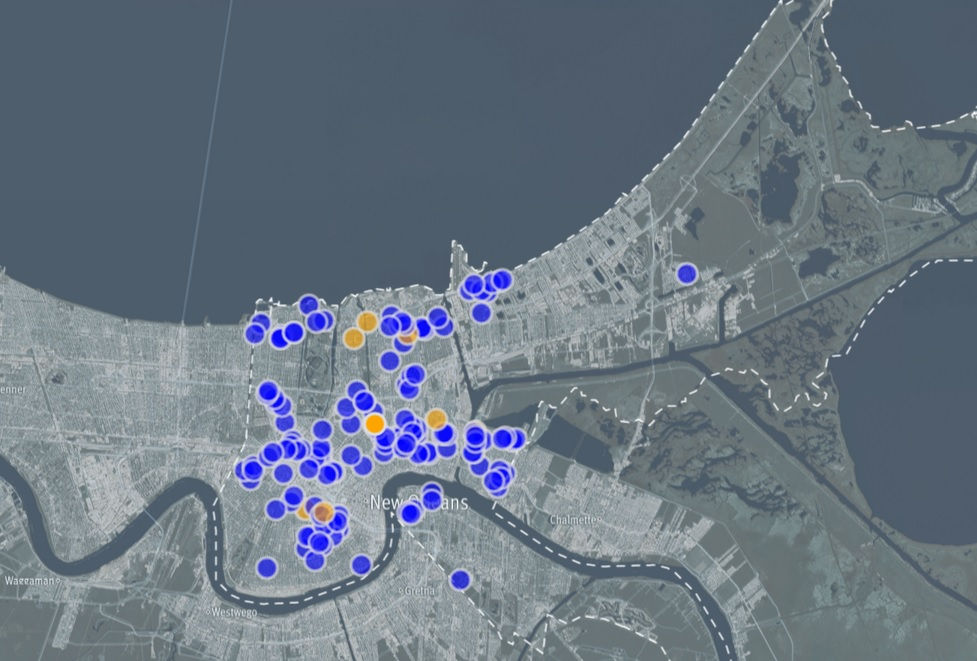
Some demolitions happened quickly to protect the public from imminent threats. Thousands likely took place because of irreparable storm or flood damage. Many were carried out based on judgment calls; pieces of the city’s history are gone, for better or for worse. More than a few took place without the owners’ knowledge. And still others were conducted illegally, without a city permit. The app offers three different views of what the journalists found when they examined the issue.
The project is part of the evolution of a post-Katrina blog called Squandered Heritage, started in 2006 by Karen Gadbois. As a textile artist, Gadbois was concerned about the aesthetic her adopted city was losing in its rush to become the “new New Orleans.” With a digital camera and a website, she began documenting buildings that were on demolition lists. Her work caught the attention of media outlets near and far, and eventually spawned a federal investigation into a corrupt home rehabilitation program for the poor and elderly. In 2009, Gadbois teamed up with New Orleans journalist Ariella Cohen to start The Lens, the city’s first nonprofit newsroom. And probably also the cities first non-profit storytelling platform.
Opmerkingen